I’ve always assumed Paint.NET was called that because it’s built on the .NET Framework. Is that why it’s Windows-only? If so, it probably will run on Linux these days, no problem. .NET has native Linux support from version 5 onward £we’re currently at 10) and even older versions have the Mono project to fall back on.
I think this was in the late 2000s even the .NET naming style was in vogue from memory.
I would imagine there are other roadblocks for a “quick and dirty” port to Linux like the plugin system (I’ve used it occasionally when I needed a feature not provided by the core app).
On one hand, one would think it would be somewhat realistic to make a clone application (relative to more advanced image editors), but then again I think one strengths of Paint.net is usability/UI/UX. It’s one of the few applications I’ve set up family members with (they need something beyond Paint, but nowhere near the massive bloat of PS) that required no initial intro or on-going support.
They’ve been able to borderline break our open source eReader for Android, while not using any of the advanced features or messing much with options.
It’s one of the few applications I’ve set up family members with (they need something beyond Paint, but nowhere near the massive bloat of PS)
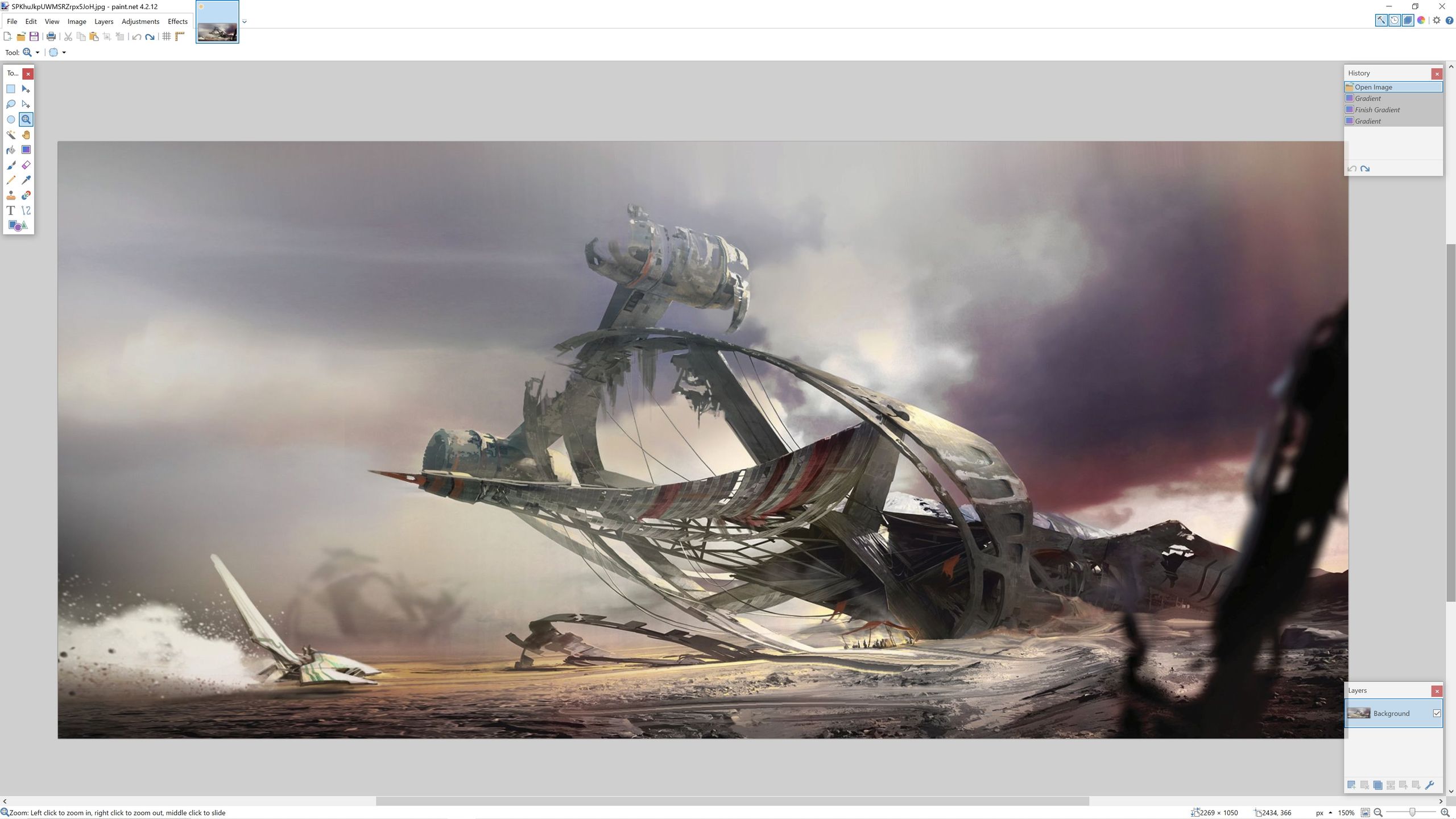
Ha! I’ve had the same use-case and the same solution. I personally use Paint.NET for the ability to uses layers and blending features. I wish it had better masking support for layers, but I got by quite well even without it.

I’ve always assumed Paint.NET was called that because it’s built on the .NET Framework. Is that why it’s Windows-only? If so, it probably will run on Linux these days, no problem. .NET has native Linux support from version 5 onward £we’re currently at 10) and even older versions have the Mono project to fall back on.
I think this was in the late 2000s even the .NET naming style was in vogue from memory.
I would imagine there are other roadblocks for a “quick and dirty” port to Linux like the plugin system (I’ve used it occasionally when I needed a feature not provided by the core app).
On one hand, one would think it would be somewhat realistic to make a clone application (relative to more advanced image editors), but then again I think one strengths of Paint.net is usability/UI/UX. It’s one of the few applications I’ve set up family members with (they need something beyond Paint, but nowhere near the massive bloat of PS) that required no initial intro or on-going support.
They’ve been able to borderline break our open source eReader for Android, while not using any of the advanced features or messing much with options.
Ha! I’ve had the same use-case and the same solution. I personally use Paint.NET for the ability to uses layers and blending features. I wish it had better masking support for layers, but I got by quite well even without it.